
Mumbwa Copper–Gold Project (Zambia) – 3D AI Modelling
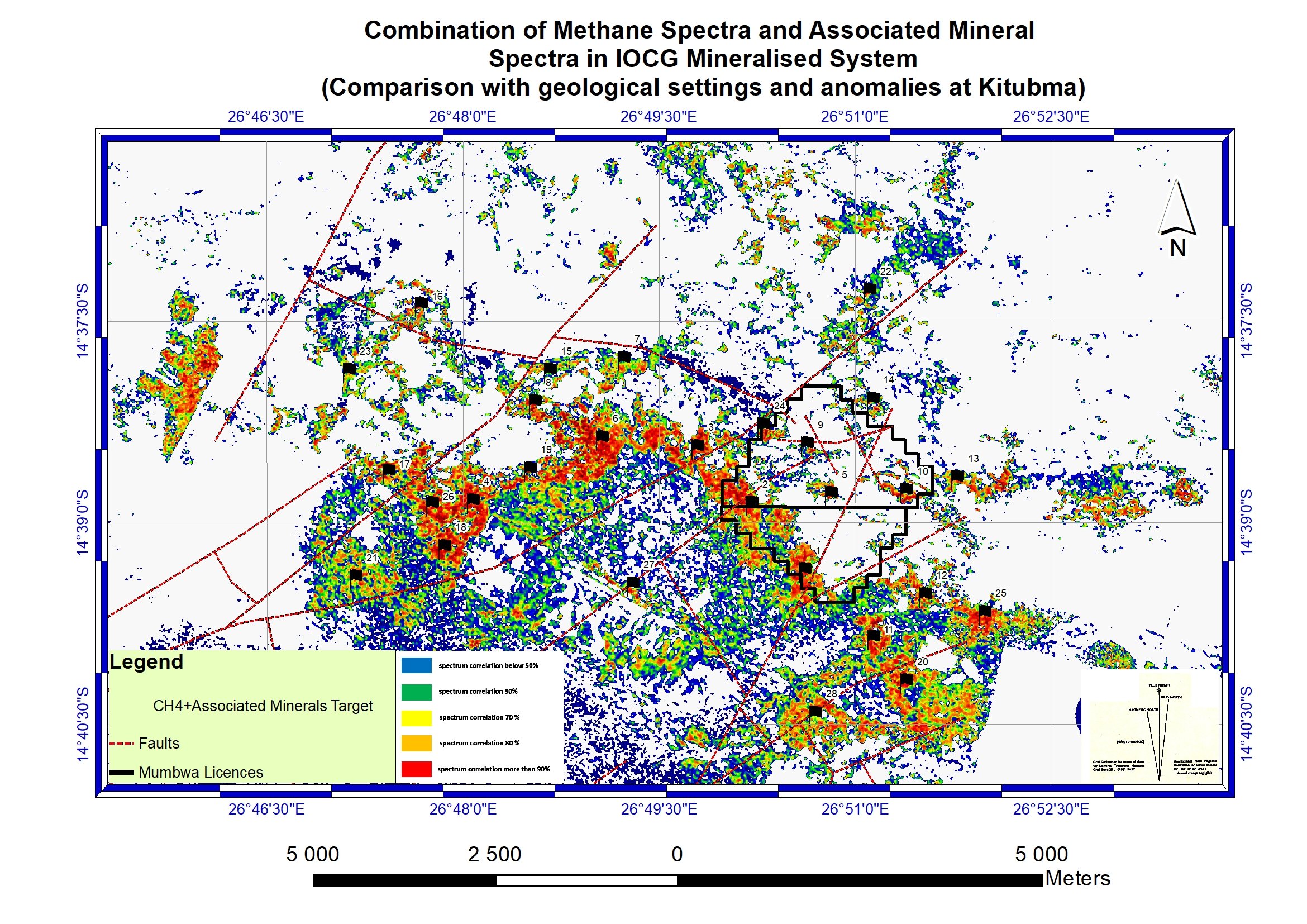
Work Conducted: Spectral inversion, gas anomaly modelling (CH₄, He), 3D block modelling
Commodities: Cu–Au–Co–REE
Results:
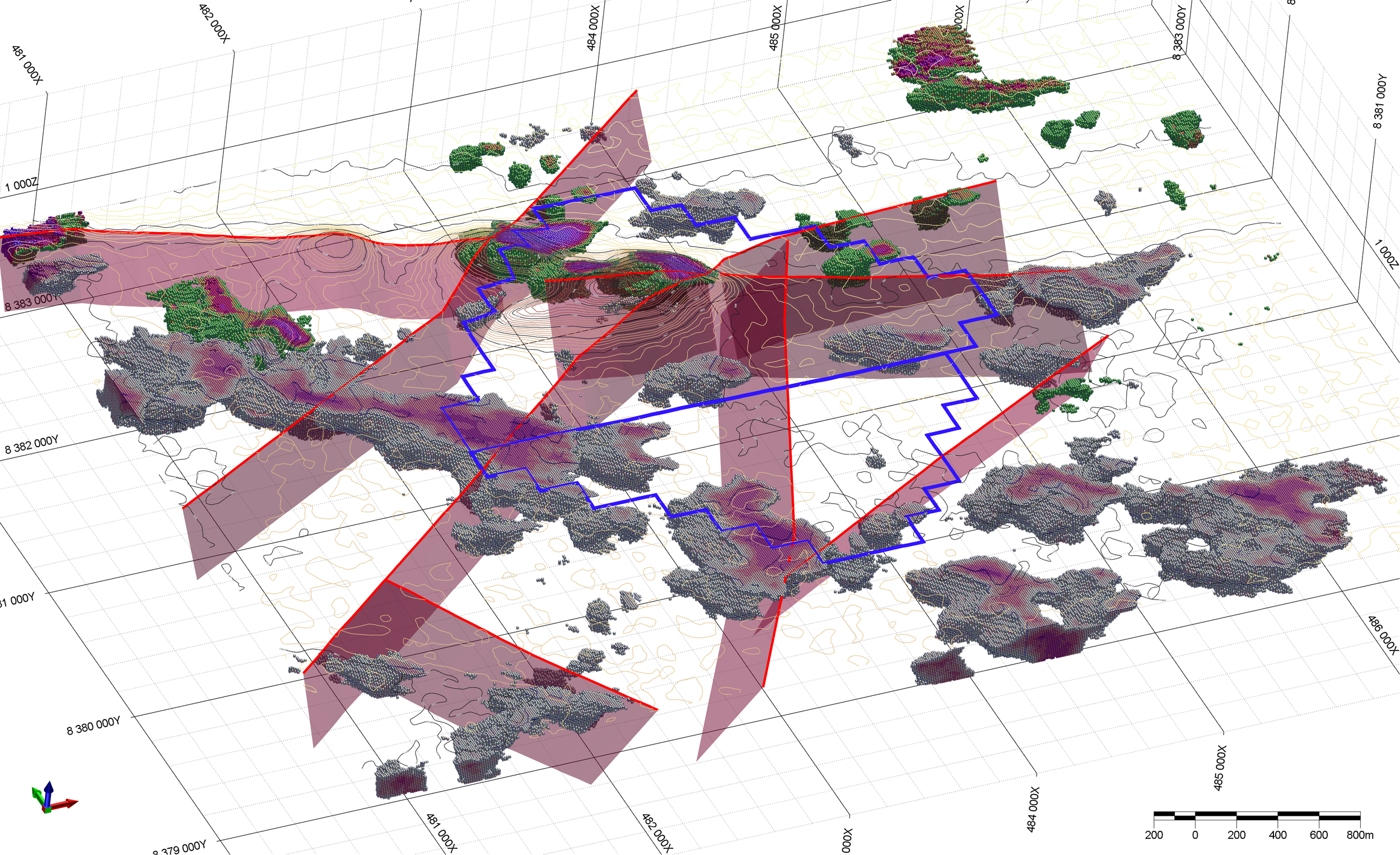
Mineralised zones defined to 500–600 m depth
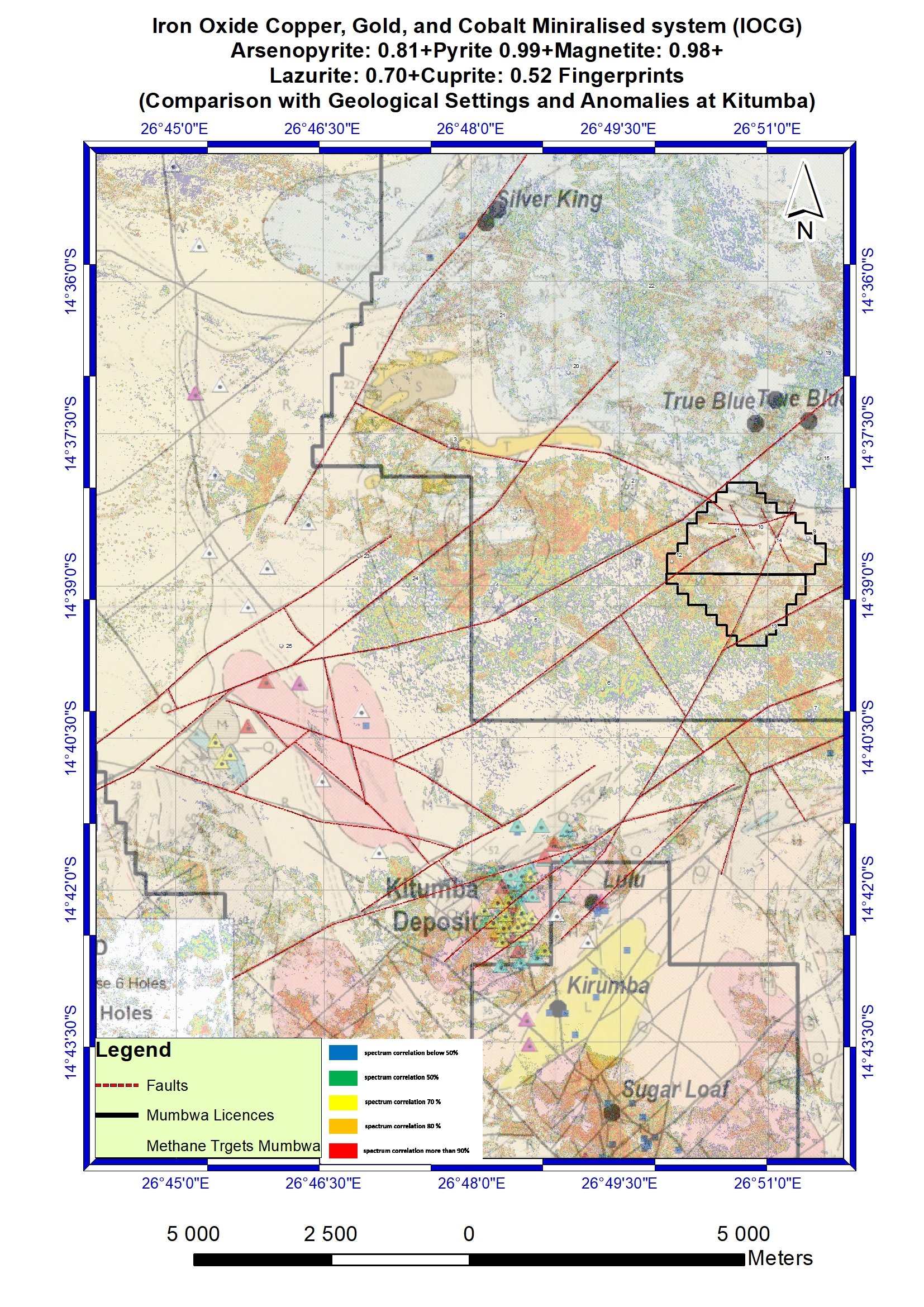
IOCG style Cu-Au system identified
Multiple drill-ready targets generated
Outcome:
Identification of district-scale mineral system with tier-one e
Technical Value:
Integration of surface and deep indicators into a unified predictive model
Ability to define vertical continuity and geometry of mineralised systems
Reduction of exploration uncertainty through multi-layer AI correlation
Outcome:
The project resulted in the definition of a district-scale mineral system with tier-one exploration potential, supported by a robust 3D geological and predictive framework.
The outputs provide a clear pathway for follow-up exploration, including targeted geophysics (IP, GPR/Loza) and optimised drilling programs focused on the highest-probability zones.
Geological Context:
The project area is located within the Mwembeshi Shear Zone, a region known for hosting structurally controlled Cu–Au systems and IOCG-style mineralisation. Mineralisation is interpreted to be associated with deep-seated hydrothermal systems linked to intrusive activity, with both oxide and sulphide expressions observed.
Key Results:
Mineralised zones delineated to depths of 500–600 m, supported by integrated spectral and gas anomaly modelling
Clear identification of IOCG-style Cu–Au mineralisation, with associated Co and REE signatures
Strong correlation between methane and helium anomalies and deep sulphide systems, indicating active fluid pathways
Mapping of structural corridors and fault intersections controlling mineralisation distribution
Identification of both:
Near-surface oxide zones (malachite, chrysocolla)
Deeper sulphide mineralisation (chalcopyrite, arsenopyrite, cobaltite)
Generation of multiple high-confidence, drill-ready targets, ranked by probability and geological consistency